
eng
eng
it
Progressive metering valves
type a | b | c | d | e
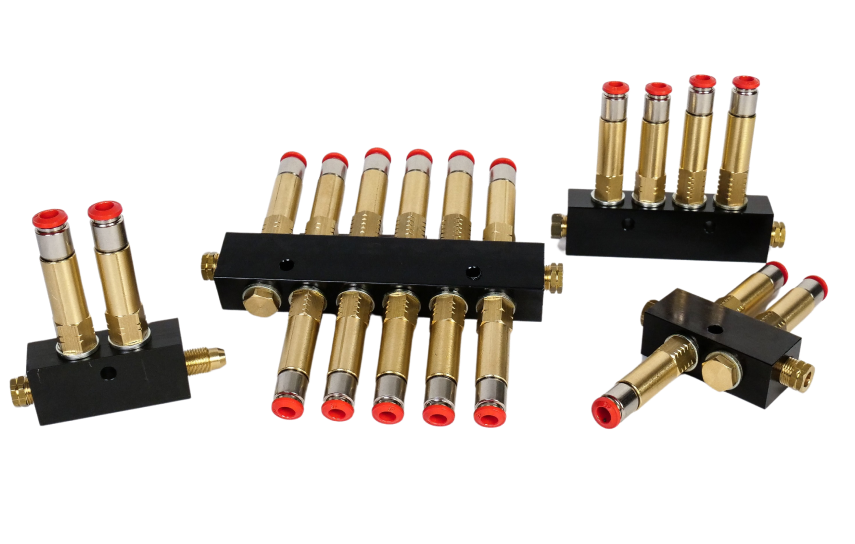
The A, B, C, D and E progressive metering valves are designed for centralized grease lubrication systems.
Each metering valve delivers a predetermined quantity of lubricant to individual lubrication points. Different valve types provide different output volumes, allowing the lubrication system to supply the correct amount of grease according to the requirements of each component.
The metering valves are particularly suitable for applications where different lubrication points require different grease quantities, ensuring accurate lubricant distribution and reliable system performance.
| TYPE | FLOW RATE | USAGE |
|---|---|---|
| A | 0.01 (1 line) | Brake Components |
| B | 0.03 (2 line) | Suspension Components |
| C | 0.05 (3 line) | Steering Components |
| D | 0.10 (4 line) | Fifth Wheel Coupling |
| E | 0.20 (5 line) | Special Applications |


